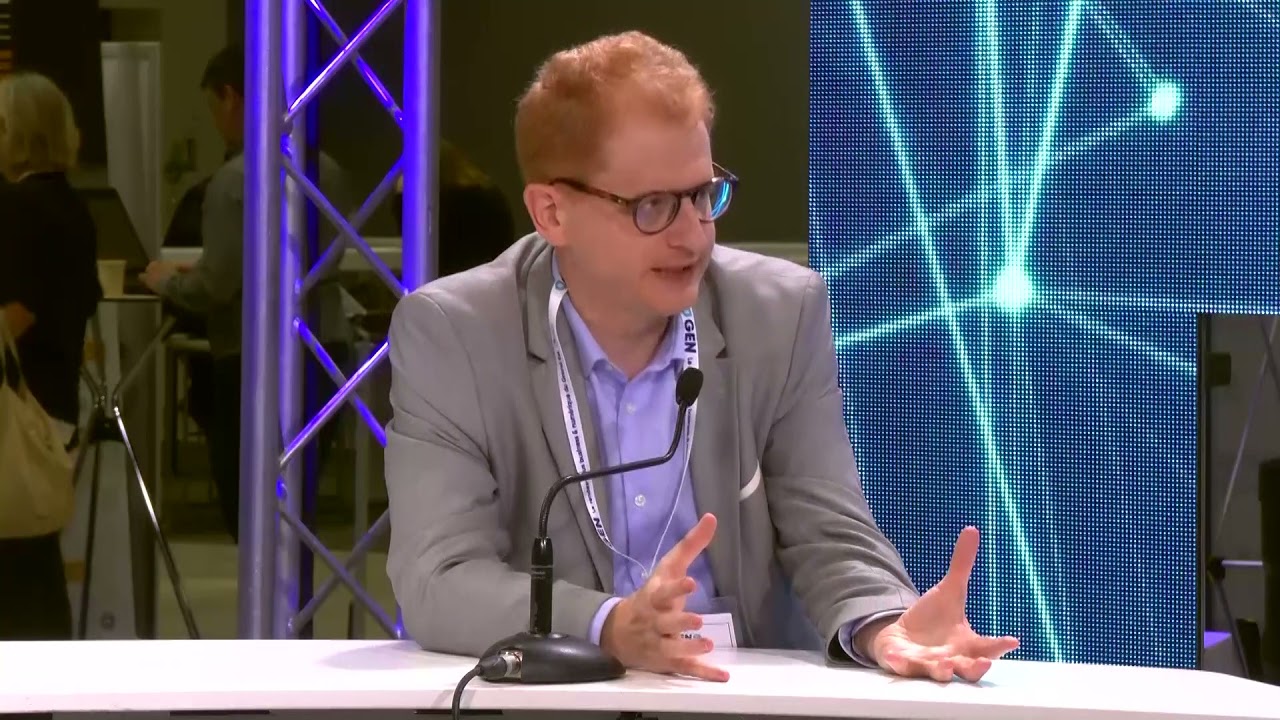
Interview • Guy-Philippe Goldstien • Cybersécurité
Interview • Guy-Philippe Goldstien • Cybersecurity
Keywords
Summary
227 words
Critical Evaluation
Value of the Information & Strength of the Argument
The video provides a valuable overview of the cybersecurity landscape, combining macro-level trends with concrete, actionable advice for small businesses. The expert’s argumentation is structured using a ‘funnel’ approach, moving from global issues to specific recommendations. He supports claims with references to official bodies (ANSSI, FBI, government statements) and his own research, such as the study showing the financial impact of cyber shocks. The strength of the argumentation lies in its clarity and practical orientation, though some points are made somewhat hastily and lack deeper technical detail. The suggestion of simple measures (passwords, MFA, updates) is well-grounded and useful for non-specialist audiences.
Scientific Rigor, Source Quality, Title Accuracy
The expert cites several credible sources: ANSSI statistics, UK research on human error, US government announcements (Biden’s cybersecurity summit), Israel’s investment stats, and his own study for Rapid Abus. These lend authority, though specific URLs or publications are not mentioned. The title is accurate and aligns with the content. The interview is professionally conducted, but the format limits depth, and some claims (e.g., China/Russia attribution) are made without detailed evidence. Overall, the scientific rigor is moderate, acceptable for an interview format.
198 words
Title / Content Match
The title accurately reflects the interview content with a cybersecurity expert.
Quality & Reliability
7/10
The expert is a researcher at the School of Economic Warfare and advisor at PwC, providing credible institutional references (ANSSI, FBI, White House statements). However, some claims lack specific sources and the tone is somewhat general.
Key Moments
Markers derived by PSI from the transcript: the creator did not define chapters.
- Introduction to the funnel technique and global outlook
- Worsening situation: ANSSI reports 2.5x increase in ransomware
- Human factor as main cause of breaches, UK statistics 90%
- Study on financial impact of cyber shocks: 22% loss in value
- Three types of attacks: DDoS, exfiltration, ransomware with examples
- Recommendations for SMEs: passwords, MFA, encryption, updates, training
- Future risks: robotics and cyber-physical attacks
Cited Sources
- ANSSI reports on ransomware — Cited as source for the 2.5x increase in ransomware attacks
- UK statistics on human error — Referenced to claim over 90% of breaches involve human error
- US government announcement (Biden cybersecurity summit) — Mentioned $30 billion investment by Google and Microsoft
- France's cybersecurity investment plan — President Macron announced €1 billion plan
- Israel's cybersecurity startup investment data — 41% of global investments in H1 2021
- Study on financial impact of cyber shocks — His own study for Rapid Abus involving 130 companies
Contribution & Novelties
The video contributes by synthesizing current cybersecurity threats and offering a clear, accessible framework for SMEs. It stands out for presenting the human factor as the primary vulnerability and linking it to simple practical steps. The expert’s perspective on the exponential growth of cyber-physical risks in robotics and autonomous vehicles adds an original futuristic dimension, though it’s not deeply explored.
Pour aller plus loin :
- Multi-factor authentication (Wikipedia) — Core recommendation to improve access security.
- Ransomware (Wikipedia) — Overview of growing attack type discussed.
- Cyber insurance (Wikipedia) — Mitigation strategy for financial impact.
- Zero trust architecture (Wikipedia) — Modern security model relevant to the recommendations.
105 words
Radar Profile
The radar profile shows a balanced but moderate score across quantitative and qualitative dimensions, with a slightly higher score in reliability due to institutional references. The technical level is intermediate, reflecting an accessible interview rather than deep technical discourse.