Zostań naukowcem
Become a scientist
Title history
- Zostań naukowcem — observed on 20261026-1137 UTC (YouTube)
Keywords
Summary
154 words
Critical Evaluation
Value of the Information & Strength of the Argument
The video provides firsthand accounts from doctoral students and faculty, offering valuable insight into the research environment and opportunities at the institute. The argumentation is primarily testimonial, relying on personal experiences rather than quantitative data or comparative analysis. While this effectively conveys enthusiasm and satisfaction, it lacks objective measures of program quality or outcomes. The scientific descriptions are brief and serve more to showcase research areas than to explain them in depth.
Scientific Rigor, Source Quality, Title Accuracy
As an official institutional video, the information is credible, but the absence of external references or citations means the scientific claims are not independently verifiable. The title ‘Become a Scientist’ accurately represents the content, which is a recruitment pitch for the doctoral program. No comments were analyzed due to lack of data.
139 words
Title / Content Match
The title 'Become a Scientist' accurately reflects the content, which encourages viewers to pursue a scientific career by joining the doctoral program.
Quality & Reliability
7/10
The video is produced by the Institute of Physics of the Polish Academy of Sciences, a reputable scientific institution, but its primary purpose is promotional, and the scientific content is presented at a superficial level without detailed evidence.
Key Moments
Markers derived by PSI from the transcript: the creator did not define chapters.
- Introduction by Leszek Sirko, director of the Institute of Physics, describing the institute's history and research areas.
- Testimonial from doctoral student Zsiga about his research on topological crystalline insulators and the appeal of theoretical physics.
- Testimonial from Ewelina Milińska, a doctoral student, about her experiences, including international conferences and grant funding.
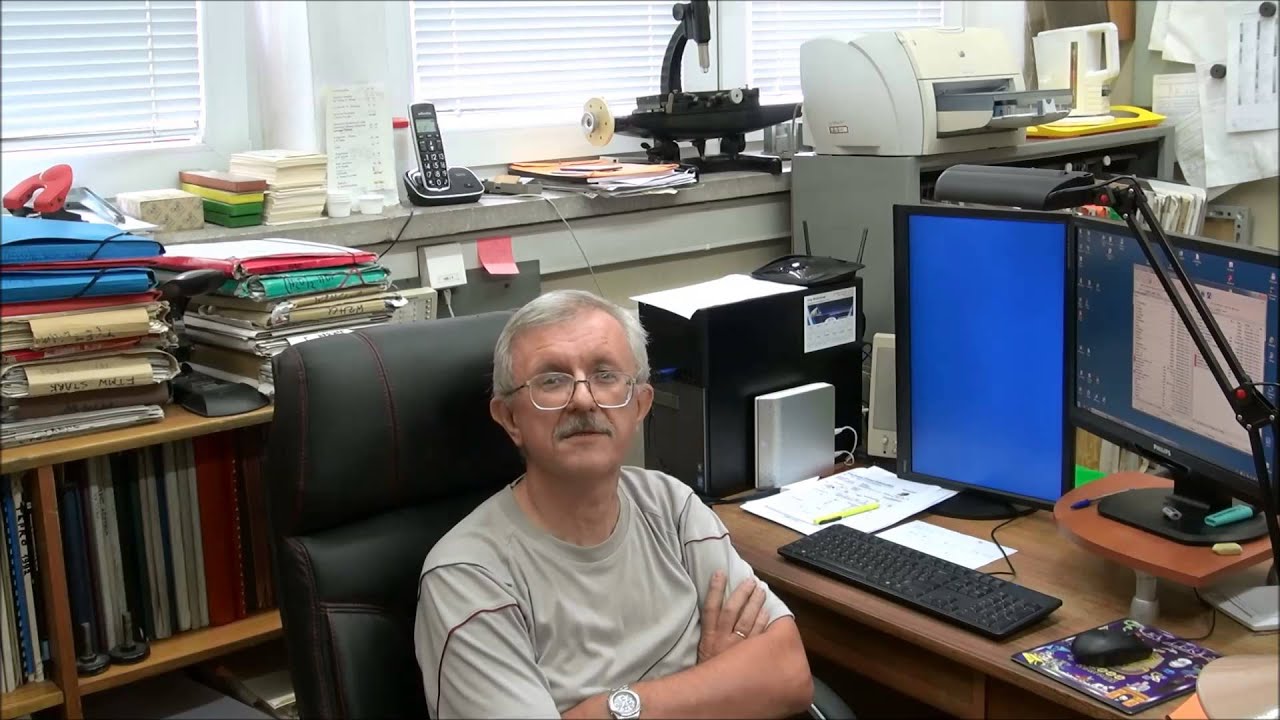
- Professor Zbigniew Kisiel explains his research using microwave spectroscopy and its applications in radio astronomy, inviting students to his lab.
- Closing remarks reiterating the invitation to apply for the doctoral program, with next admission interviews on September 19, 2014.
Contribution & Novelties
The video contributes a promotional yet informative overview of a doctoral program in a prominent Polish research institute. It highlights current research themes, but its novelty is limited to the specific program details and personal testimonials. For interested viewers, the following concepts provide deeper insights into the research areas mentioned:
Pour aller plus loin :
- Topological insulator — A key topic in condensed matter physics, illustrating the type of research described by one student.
- Nanomaterials — The institute conducts research on quantum nanostructures, which are crucial in material science.
- Microwave spectroscopy — The technique used by Professor Kisiel for molecular structure analysis, with applications in radio astronomy.
- Radio astronomy — The field that applied the spectroscopic methods to study interstellar clouds, as mentioned in the video.
126 words
Radar Profile
The radar profile shows moderate scores across information quantity, quality, and technical level, with a slightly higher reliability score due to the institutional source. This reflects a video that is trustworthy but not informationally dense, primarily serving as an introduction rather than a detailed scientific resource.