"Magnetyczność", nauka czy fantastyka?
"Magnetism", science or fantasy?
Keywords
Summary
123 words
Critical Evaluation
Value of the Information & Strength of the Argument
The lecture provides substantial value by bridging foundational electromagnetism with cutting-edge research on magnetic monopoles and spin ice. The argumentation is well-structured, moving from theoretical basis to experimental evidence and open challenges. The speaker argues convincingly that magnetism remains a rich source of genuine scientific inquiry, countering the notion that it is purely fantastical. He supports his points with references to Maxwell’s work and recent experiments, presenting a reasoned perspective on the feasibility of magnetic monopoles. However, the argumentation sometimes suffers from the informal delivery and incomplete transcript, which limits the depth of some explanations.
Scientific Rigor, Source Quality, Title Accuracy
The scientific rigor is moderate: the speaker is an established professor, which lends credibility, but the transcript lacks explicit citations or references to specific publications. The title accurately reflects the content’s focus on separating scientific fact from speculation. There is no deviation between the advertised topic and the delivered lecture, which is a positive point. Public comments are not available for analysis, but based on the topic’s specificity, the audience likely appreciates the expert presentation.
185 words
Title / Content Match
The title suggests a reflection on the scientific reality of magnetic phenomena, which the lecture indeed addresses by presenting actual research results and theoretical concepts.
Quality & Reliability
7/10
The lecture is given by a senior physicist and covers advanced topics in magnetism, but the transcript is incomplete and contains no cited sources; hence a solid but not maximum reliability score.
Key Moments
Markers derived by PSI from the transcript: the creator did not define chapters.
- Introduction and welcome, setting the stage for the lecture on magnetism.
- Discussion of Maxwell's equations and the theoretical basis for magnetic monopoles.
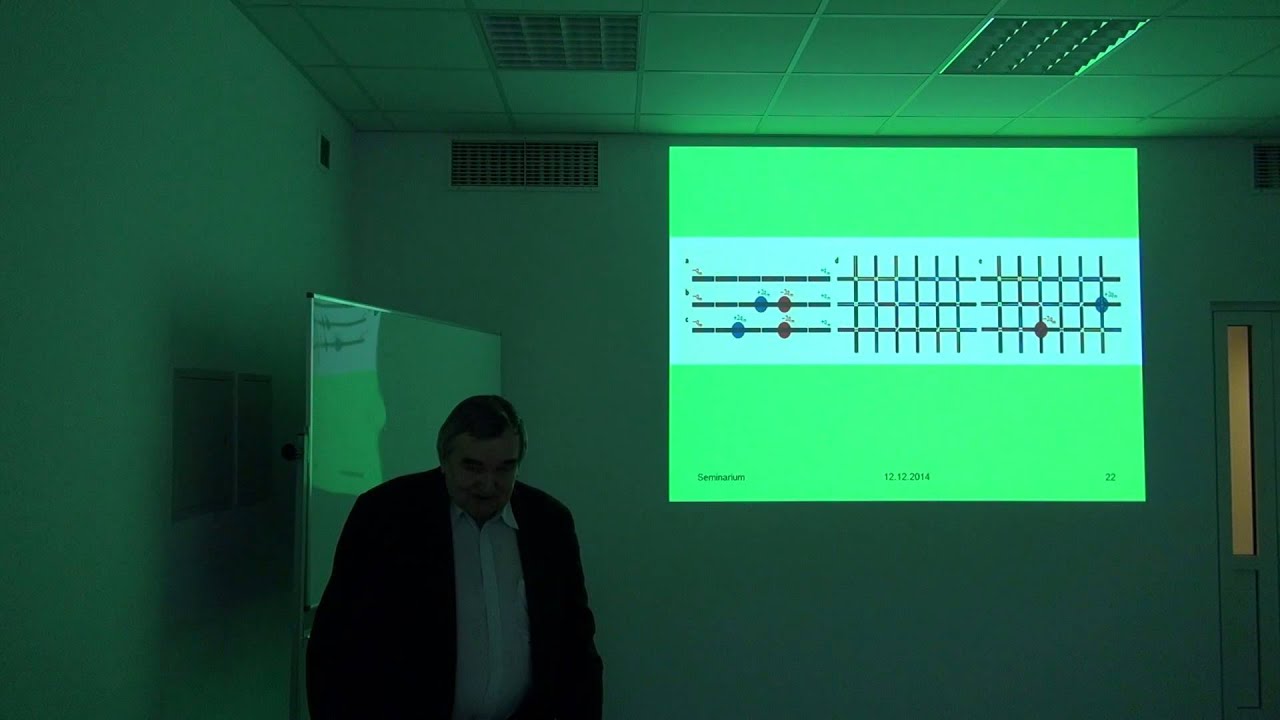
- Presentation of spin ice materials and the concept of emergent monopoles.
- Experimental approaches to detect magnetic charges and findings.
- Conclusion and potential applications, including future research directions.
Cited Sources
- Institute of Physics of the Polish Academy of Sciences — Official institute where the lecture was delivered.
Contribution & Novelties
This lecture contributes to the popular science discourse by clarifying the scientific status of magnetic monopoles and exotic magnetic states, presenting real research from a leading physicist. It offers a nuanced view that such phenomena are not mere fantasy but subjects of active investigation. The novelty lies in making advanced concepts like spin ice and monopole dynamics accessible to a broader audience.
Pour aller plus loin :
- Magnetic monopole - Wikipedia — Provides a comprehensive overview of the theoretical and experimental status of monopoles.
- Spin ice - Wikipedia — Details the frustrated magnetic materials where monopole-like excitations appear.
- Maxwell’s equations - Wikipedia — Foundational equations discussed in the lecture, essential for understanding electromagnetism.
113 words
Radar Profile
The radar profile shows strong scores in quantity of information and technical level, reflecting a information-dense lecture for a specialized audience. The slightly lower quality and reliability scores indicate potential gaps due to transcript quality and absence of formal citations. Overall, the lecture excels in substance but could benefit from more transparent sourcing.