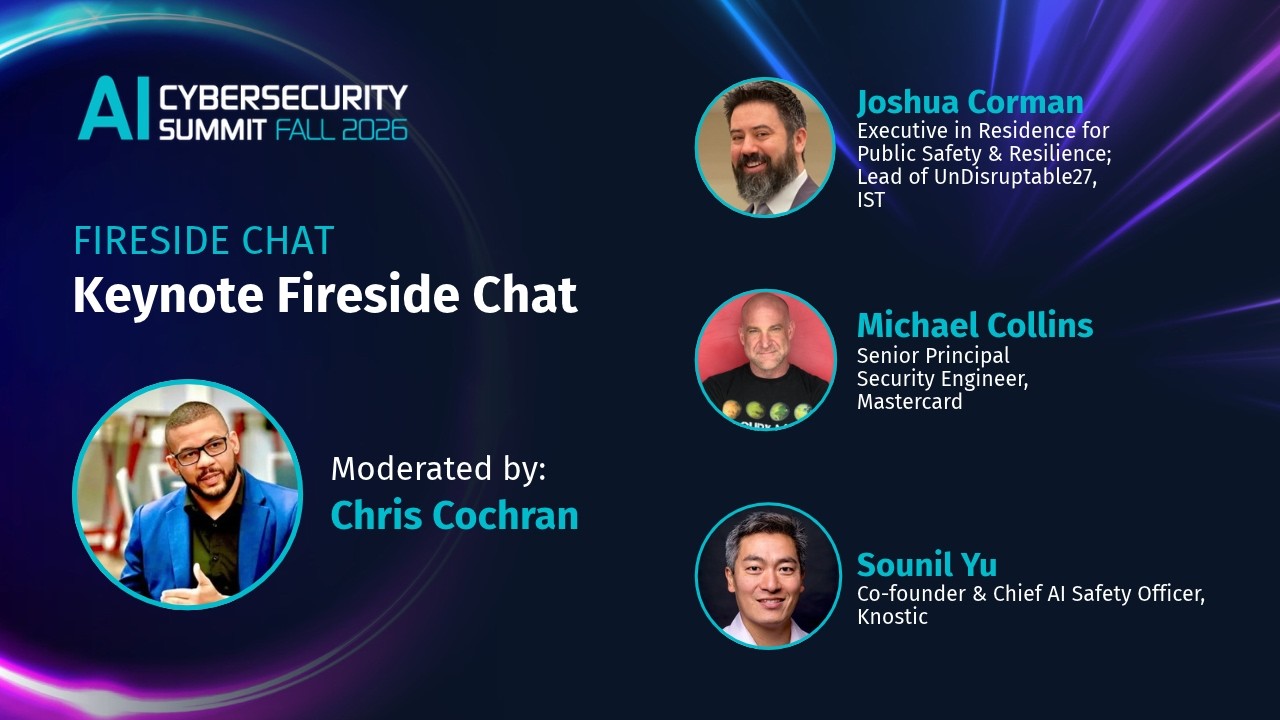
Fireside Chat with Keynote Speakers | Day 2
Keywords
Summary
171 words
Critical Evaluation
Value of the Information & Strength of the Argument
The discussion provides substantial value by offering multiple expert perspectives on real-world cybersecurity challenges. The arguments are coherent and grounded in practical experience, such as the medical device recall and the impact of AI on patch generation. The panel effectively challenges the over-optimistic claim of zero vulnerabilities, citing that security problems will merely morph (e.g., from code defects to configuration errors). The use of analogies (typos, grammatical errors) makes complex ideas accessible. The argumentation is solid but relies on anecdotal evidence and lacks empirical data. The speakers acknowledge limitations and counterarguments, enhancing credibility. The value is particularly high for practitioners dealing with legacy systems and AI adoption.
Scientific Rigor, Source Quality, Title Accuracy
Scientific rigor: The content is opinion-based rather than peer-reviewed research. Speakers reference public incidents (WannaCry, Petya, medical device recalls) and internal projects (e.g., ‘fragile foundations’) without citing specific sources. The lack of formal references reduces reproducibility. Sources: The only URL provided is a link to the next SANS summit; no additional sources are mentioned in the description. The panel mentions industry tools like CVE, CVSS, and EPSS but without in-depth explanation. Title/content adequacy: The title is accurate; it is indeed a fireside chat with keynote speakers. No discrepancy exists.
211 words
Title / Content Match
Title accurately describes the content: a fireside chat with keynote speakers on Day 2 of the summit.
Quality & Reliability
7/10
Expert panel discussion with experienced professionals from Mastercard, IST, Knostic, and SANS. No formal citations, but speakers reference real incidents (WannaCry, Petya, medical device recall) and industry experience. Depth of knowledge is high, but claims are opinion-based.
Key Moments
Markers derived by PSI from the transcript: the creator did not define chapters.
- Joshua Corman recounts the medical device recall and his daughter's hospitalisation during the WannaCry/Petya attacks, illustrating the human impact of insecure software.
- Michael Collins discusses how AI generation of patches works well for modern systems but fails for legacy unsupported technologies, and mentions the challenge of attacking critical infrastructure.
- Sounil Yu presents the typos-to-loopholes analogy, suggesting that with larger context windows AI will find far more complex vulnerabilities than simple code defects.
- Panel reacts to Anthropic's claim of being 9-12 months from zero vulnerabilities; they remain sceptical, citing configuration errors and the long tail of legacy systems.
- Discussion shifts to the least agency principle and whether tightly controlling agent action could reduce the need for identity and privilege management.
Cited Sources
- SANS AI Cybersecurity Summit Spring 2027 — Promotional link to the next summit, mentioned at the end of the video.
Contribution & Novelties
The video offers a unique expert panel discussion that synthesises current thinking on AI’s impact on vulnerability management. Original insights include the prediction that AI will shift security problems to higher levels (business logic, config errors) and the proposal to continually re-code applications with new models as a cultural shift. It also challenges common tools like CVE/CVSS, advocating for a more nuanced risk-based approach.
Pour aller plus loin :
- Common Vulnerabilities and Exposures (CVE) — Context for the discussion on vulnerability databases.
- Common Vulnerability Scoring System (CVSS) — Background on scoring limitations criticised in the video.
- Exploit Prediction Scoring System (EPSS) — A proposed alternative for prioritisation mentioned by Joshua Corman.
- WannaCry ransomware attack — Historical incident referenced by Corman.
120 words
Radar Profile
The radar profile shows high scores in information quantity and technical level, reflecting a dense, expert-level discussion. Quality and reliability are moderate, consistent with opinion-driven content. The fiability score is slightly lower due to lack of formal citations.