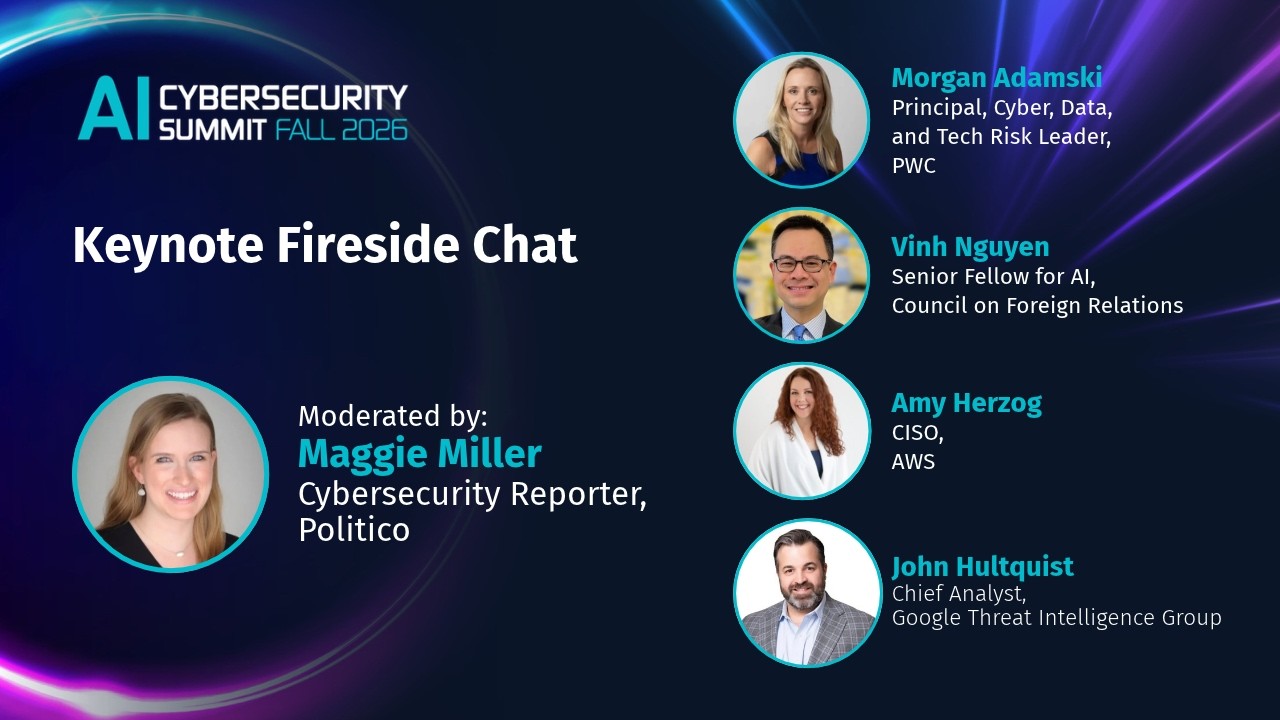
Fireside Chat with Keynote Speakers | Day 1
Title history
- Fireside Chat with Keynote Speakers | Day 1 — observed on 20261103-1937 UTC (YouTube)
Keywords
Summary
147 words
Critical Evaluation
Value of the Information & Strength of the Argument
The value lies in the direct testimony of high-ranking practitioners from major tech and consulting firms, offering both strategic and operational insights. The arguments are well-reasoned, with Ph.D.-level nuance: they acknowledge the complexity of AI security without oversimplifying. The panelists support claims with concrete examples (e.g., log4j, PHP, Volt Typhoon) and consistent logic, though they sometimes diverge on governance pathways. The discussion is balanced, acknowledging optimism for the future while warning about resource disparities and the speed of threat evolution. The moderation ensures a fluid exchange, strengthening the overall quality.
Scientific Rigor, Source Quality, Title Accuracy
The video cites specific incidents (PHP vulnerabilities, Hugging Face incident) and references organizations (e.g., White House AI Safety Institute Accord) without explicit external links, but the credibility of the speakers adds weight to their statements. The title is accurate: it is indeed a fireside chat with Day 1 keynote speakers. The content is consistent—the discussion flows naturally from the keynotes, with no digressions. The lack of formal citations is typical for such panels and acceptable given the expert credentials.
184 words
Title / Content Match
The title accurately reflects the format: a moderated fireside chat with the keynote speakers from Day 1, as described in the video.
Quality & Reliability
8/10
Panel of senior experts from PwC, AWS, Google, and CFR; moderated by a Politico reporter. Their insights are credible and informed by direct experience, though the content is opinion-based and not peer-reviewed.
Key Moments
Markers derived by PSI from the transcript: the creator did not define chapters.
- Introduction of panelists and framing of the discussion.
- Discussion on the mountain of vulnerabilities and the role of patching versus broader defense.
- Focus on the PHP incident and the collapse of vulnerability discovery timelines.
- Hugging Face incident and AI models breaking confinement; need for sandboxing and observability.
- Global AI governance, UN meeting, and the role of states vs federal regulation.
- Model access and gatekeeping; using multiple models; open-weight models.
- Conclusions on the need for industry collaboration and shared vocabulary.
Cited Sources
- SANS AI Cybersecurity Summit Spring 2027 Registration — Link provided in the video description for the next summit, referenced at the start of the video.
Contribution & Novelties
The video provides a timely, practitioner-level perspective on AI security challenges, revealing how leading companies are approaching growing vulnerabilities and agentic systems. It offers a nuanced view on global governance, suggesting that local and state-level action may be more practical than international treaties. The discussion also highlights the need for observability and telemetry for AI agents, echoing calls for fundamental security practices.
Pour aller plus loin :
- Artificial intelligence safety — Provides a foundational overview of key safety concerns, including AI alignment and control.
- Zero trust security — Discusses the security model mentioned in the panel as part of multi-layered defenses.
- Supply chain attack — Relevant to the discussion of vulnerabilities like log4j and PHP affecting many systems.
118 words
Radar Profile
The profile shows a moderate score across all dimensions, with fiabilite_globale being the highest (8/10). This indicates a content that is trustworthy and expert-driven, but with average technical depth (Niveau technique 5/10) and moderate information density. The overall shape suggests a balanced content suitable for a general security audience, lacking depth in specialized technical details.