Smart Outlier Detection
Keywords
Summary
209 words
Critical Evaluation
Value of the Information & Strength of the Argument
The video offers valuable insights into a specialized area of semiconductor testing, clearly explaining the limitations of traditional methods and the rationale behind the proposed machine-learning-based solution. The argumentation follows a logical progression: starting with the economic drivers (multi-die assemblies), then critiquing current practices, presenting their innovative approach, and demonstrating benefits with concrete examples. However, the discussion is one-sided, presenting only the vendor’s perspective without independent validation or acknowledgment of potential drawbacks. The technical details are presented at an appropriate level for industry professionals, making the case compelling though not critically examined.
Scientific Rigor, Source Quality, Title Accuracy
The video does not cite external scientific references; it relies primarily on the expertise of the guest and the company’s proprietary claims. While the information is technically sound, the lack of third-party sources or empirical data reduces its scientific rigor. The title ‘Smart Outlier Detection’ accurately describes the content, focusing on the integration of in-chip monitoring and machine learning for adaptive outlier identification. The interview format is typical of industry media, and the absence of conflicting viewpoints means the audience must rely on the credibility of the interviewee.
195 words
Title / Content Match
The title accurately reflects the content: a discussion about outlier detection methods in semiconductor manufacturing, focusing on a smart/ML-based approach.
Quality & Reliability
7/10
The video provides a clear and detailed explanation of smart outlier detection for semiconductors, but it is essentially a company's perspective, which introduces potential bias. The technical content is accurate and well-illustrated with examples.
Key Moments
Markers derived by PSI from the transcript: the creator did not define chapters.
- Introduction: why outlier detection is more important with chiplet-based designs and the economic impact of defective dies.
- Explanation of traditional Part Average Testing (PAT) and its limitations: absolute value comparisons without considering context.
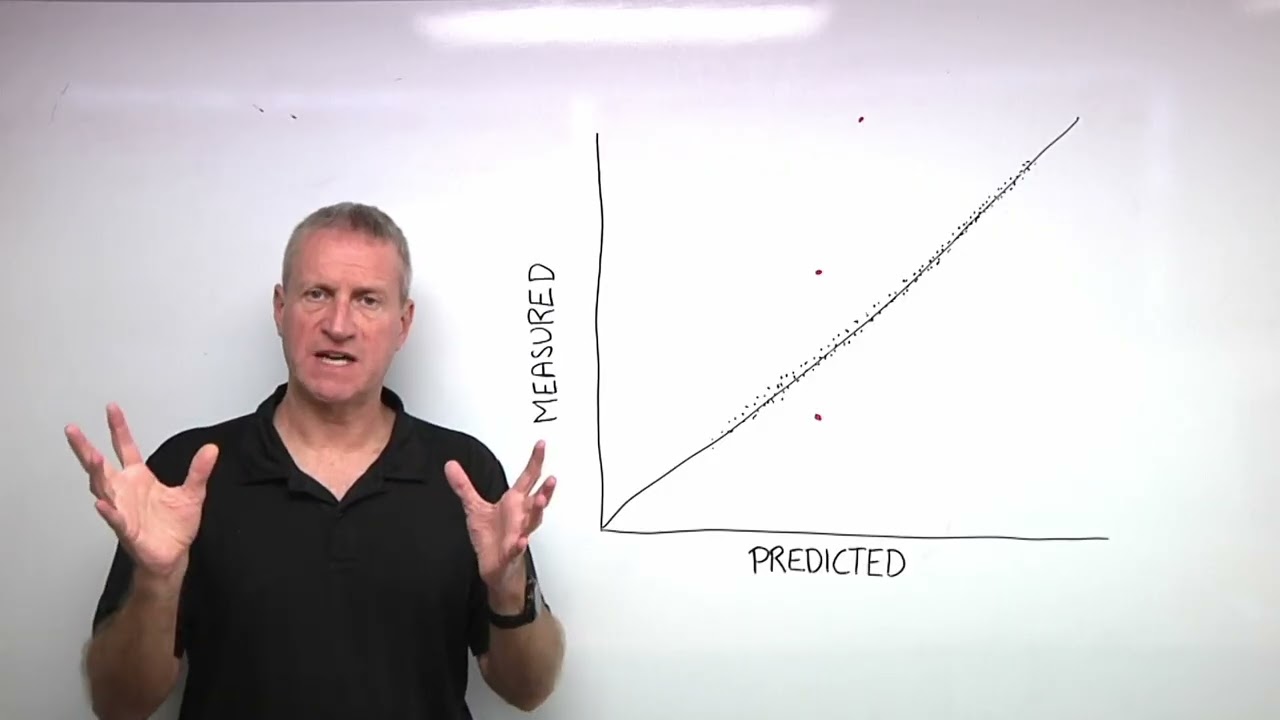
- Presentation of smart outlier detection: in-chip monitors capture process and timing signatures, and ML models predict expected values.
- Training process: using first hundreds of devices to train models that correlate signatures with measured parameters like IDDQ.
- Benefits: avoiding unnecessary discards (yield improvement) and reducing RMA by identifying 'walking wounded' devices that are within absolute limits but deviate from predictions.
- Discussion on RMA costs across markets (consumer, data center, automotive) and the added value of timing-margin-based outlier detection for localized defects.
Cited Sources
- proteanTecs technology description — The video references proteanTecs' in-chip monitoring and machine learning platform as the basis for their outlier detection approach.
Contribution & Novelties
The video introduces a paradigm shift from absolute-value-based outlier detection to contextual, ML-driven prediction that compares each chip’s measured characteristics against its own predicted behavior based on process signatures. This allows identifying both false rejects (good chips that would be scrapped) and latent defects (chips that may fail later), thus improving yield and reliability simultaneously. The emphasis on timing-margin analysis complements traditional leakage-based methods, offering a finer granularity for localized defects.
Pour aller plus loin :
- Chiplet — Background on multi-die packaging, which is the primary motivation for the discussed approach.
- Semiconductor device fabrication — Overview of the manufacturing process and testing stages (wafer sort, final test) contextualizing the discussion.
- Machine learning — Foundational concepts used in the model training and inference for outlier detection.
125 words
Radar Profile
The radar profile shows a balanced video with strong information content and technical depth, but reliability is slightly lower due to the promotional nature of the interview. The scores indicate a well-presented, expert-driven discussion with some bias inherent in the vendor perspective.