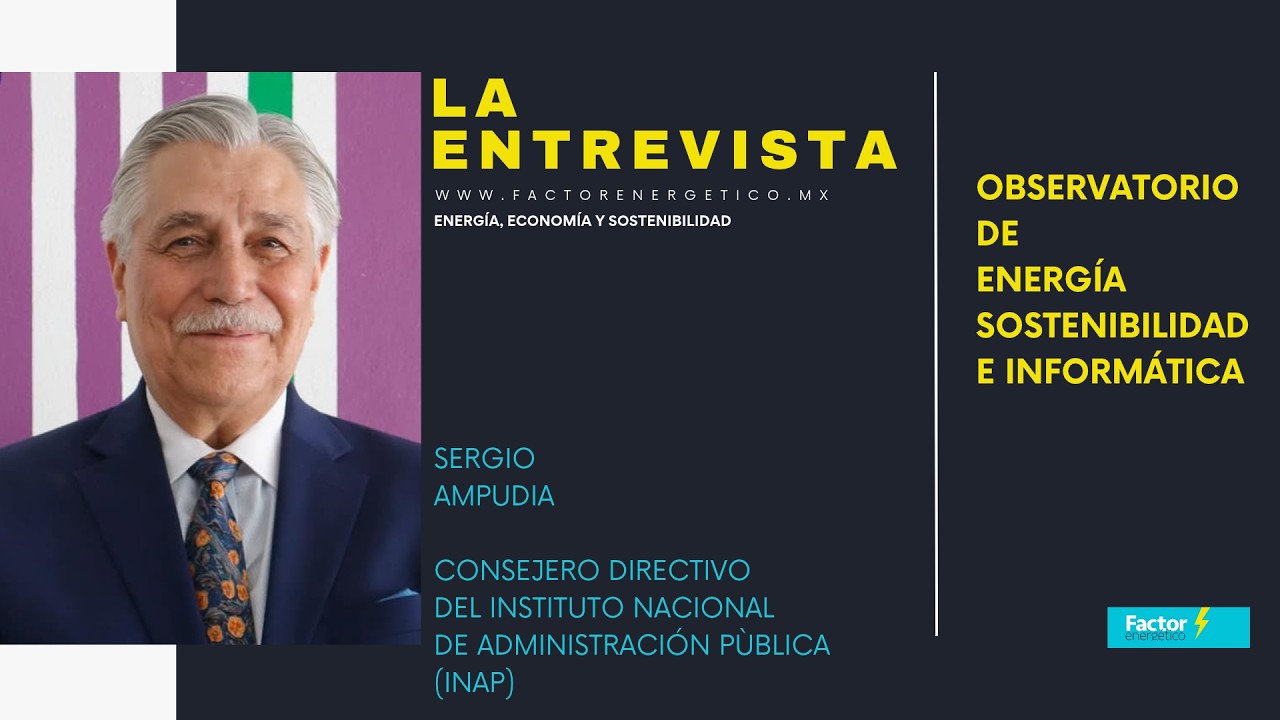
Estados y municipios pueden generar su propia energía y quitar un peso a CFE
Title history
- Estados y municipios pueden generar su propia energía y quitar un peso a CFE (PSI archive)
- Estados y municipios pueden generar su propia energía y quitar un peso a CFE — observed on 20261111-0625 UTC (YouTube)
Keywords
Summary
188 words
Critical Evaluation
Value of the Information & Strength of the Argument
The value of the information lies in providing an expert perspective on a specific public policy proposal for self-consumption in Mexican municipalities. Ampudia presents a coherent argument with practical implications, such as the potential for municipalities to generate their own electricity and even treat water for data centers. The argumentation is logical and structured, but lacks empirical evidence or quantitative analysis to support claims about electricity demand growth or the feasibility of self-consumption on a wide scale. The discussion remains largely conceptual, focusing on legal and administrative frameworks.
Scientific Rigor, Source Quality, Title Accuracy
The scientific rigor is limited as the content is based on expert opinion without citing specific studies or verifiable data. Ampudia references the Mexican constitution, recent energy laws, and the Digital Economy Law, but doesn’t provide details or sources. The title accurately represents the main theme. There are no comments to analyze, and no external sources are provided in the description. The video is essentially a causal interview, not a research presentation.
175 words
Title / Content Match
The title accurately reflects the main theme of the interview: the proposal for municipalities and states to generate their own electricity to alleviate the burden on CFE.
Quality & Reliability
5/10
The video is an expert interview discussing a public policy proposal for municipal self-consumption. It presents reasoned arguments about constitutional limits and regional differences, but lacks empirical data, quantitative analysis, or verifiable statistics. The claims are largely speculative and forward-looking, with no specific studies or references provided.
Key Moments
Markers derived by PSI from the transcript: the creator did not define chapters.
- Introduction of Sergio Ampudia and the observatory.
- Discussion on the observatory's goals and the constitutional limits on private investment.
- Mention of the 54/46 constitutional restriction and its implications.
- Proposal for municipal self-consumption and its potential to reduce CFE's burden.
- Discussion on the different regional realities: north vs south.
- Impact of the Digital Economy Law on electricity consumption in municipalities.
- Idea of state energy agencies as instruments for collaboration.
- Discussion on data centers requiring water and electricity, and the role of municipalities.
- Examples of possible missions: storage, electromobility, and multimodal supply.
- Reference to transmission and distribution challenges, and the need for value chain planning.
Cited Sources
- Constitución Política de los Estados Unidos Mexicanos — Referenced regarding the 54/46 restriction on private investment in the electricity sector.
- Ley de Economía Digital — Mentioned as a recent law increasing digital processing requirements and electricity consumption in municipalities.
Contribution & Novelties
The original contribution includes proposing the interpretation that the constitutional limit on private investment does not extend to states and municipalities, and thus they can play a role in electricity generation through self-consumption. It also suggests the creation of state energy agencies as a key tool, and links local energy production with water treatment and attracting data centers.
Pour aller plus loin :
- Federal Electricity Commission (CFE) — Context on CFE’s role.
- Mariana Mazzucato’s mission-oriented policies — Reference for the sandbox/mission approach.
- Self-consumption (energy) — Concept of energy self-generation.
89 words
Radar Profile
The radar profile is balanced with moderate scores across all dimensions, showing a content that provides reasonable information but lacks deep technical or scientific rigor. It seems more like an opinion piece with a policy proposal rather than a comprehensive analysis.