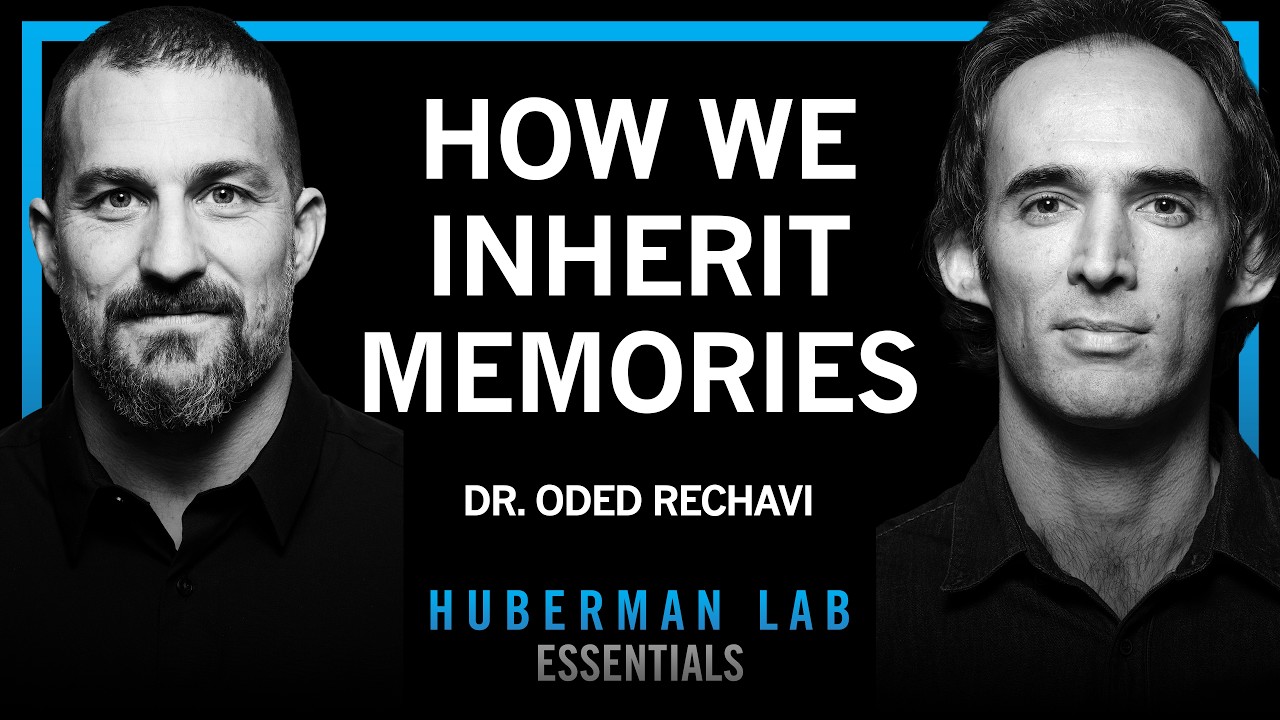
Essentials: Genes & the Inheritance of Memories Across Generations | Dr. Oded Rechavi
Keywords
Summary
225 words
Critical Evaluation
Value of the Information & Strength of the Argument
The video’s value lies in its clear, methodical presentation of complex epigenetic concepts paired with direct insight from an active researcher in the field. Dr. Rechavi grounds his claims in specific replicated experiments — notably the C. elegans fluorescent-virus assay showing transgenerational antiviral resistance carried by small RNAs even in progeny lacking the production machinery. The argumentation builds logically from basic molecular biology to the Weismann barrier, then to experimental evidence, and finally to cautious speculation about mammals. Rechavi carefully separates established findings (RNAi in worms, replicated ‘a million times’) from open questions (whether brain-to-germline transmission occurs in mammals), and he is explicit about the ’language’ problem — that synaptic information in the brain must somehow be translated into heritable molecular form.
Scientific Rigor, Source Quality, Title Accuracy
The scientific rigor is high: the guest is a leading researcher whose statements align with the published literature, including the 2006 Nobel Prize work of Fire and Mello on RNA interference cited in the episode. The historical references (Weismann, Lamarck, Darwin, Schrödinger’s 1944 book) are accurate and contextualized. The IKEA analogy effectively demystifies molecular biology without distorting it. The title ‘Essentials: Genes & the Inheritance of Memories Across Generations’ is accurate — the episode does focus on how small RNAs transmit acquired traits across generations in C. elegans and what that might mean more broadly.
232 words
Title / Content Match
The title accurately reflects the content: the episode examines how genes and small RNAs can transmit information across generations, centered on Rechavi's C. elegans research.
Quality & Reliability
8/10
Expert guest (Prof. Oded Rechavi, Tel Aviv University) presenting established, Nobel Prize-validated mechanisms (RNA interference) alongside his own published lab findings. The content is well-structured and scientifically accurate, though some claims about mammalian transgenerational inheritance remain speculative.
Chapters
- Oded Rechavi
- DNA, Genome, RNA & Proteins
- Somatic vs. Germ Cells; Inheritance
- Lamarck vs. Darwin, Inheritance of Acquired Traits
- Weismann Barrier, Epigenetic Reprogramming
- RNA & Transgenerational Inheritance
- Model Organisms, C. elegans
- Inheritance of Acquired Traits in C. elegans
- RNA Interference, Small RNAs & Gene Silencing
- Viral Resistance Across Generations
- Small RNAs, Mammals & Inherited Effects
- Brain Activity, Memory & Heritable Information
- Neuronal Small RNAs & Behavior Across Generations
- Germ Cells, Development & Heritable RNA
- Future Applications, Exercise, IVF & RNA Diagnostics
- Acknowledgements
Cited Sources
- Huberman Lab episode show notes — Detailed show notes and additional resources for this episode.
- Full episode with Dr. Oded Rechavi — The complete original interview with Dr. Oded Rechavi.
- Huberman Lab official website — Official website of the Huberman Lab Podcast with episodes and supplementary materials.
- Huberman Lab disclaimer and disclosures — Standard disclaimers and disclosures for the podcast.
Concurring Sources
- RNA interference (Wikipedia) — Corroborates the mechanism of small RNA-mediated gene silencing described in the episode.
- Caenorhabditis elegans (Wikipedia) — Supports the described features of the model organism, including its 302 neurons and detailed connectome.
External References
Contribution & Novelties
The episode’s key contribution is presenting Dr. Rechavi’s specific findings on transgenerational antiviral resistance in C. elegans, which demonstrate that acquired traits can be inherited through small RNAs — directly challenging the textbook Weismann barrier dogma. It also raises the provocative question of whether brain activity could influence heritable information, framed carefully as unproven speculation. The practical framing around RNA-based diagnostics and reproductive health applications makes it relevant beyond pure biology.
Pour aller plus loin :
- RNA interference — Wikipedia article covering the Nobel Prize-winning silencing mechanism central to the episode.
- Caenorhabditis elegans — Reference on the transparent roundworm used as the model organism in Rechavi’s experiments.
- Weismann barrier — The 19th-century concept of germline-soma separation that the episode discusses as a fundamental barrier.
- Transgenerational epigenetic inheritance — Overview of the broader phenomenon of inherited epigenetic changes across generations.
- Epigenetic reprogramming — key mechanism mentioned in the episode where DNA modifications are erased between generations.
155 words
Radar Profile
The radar profile shows high scores in quantity and quality of information (8/8) with solid reliability (8), while the technical level is moderate (6), reflecting a scientifically rich but accessible format suited for a broad audience rather than specialists.