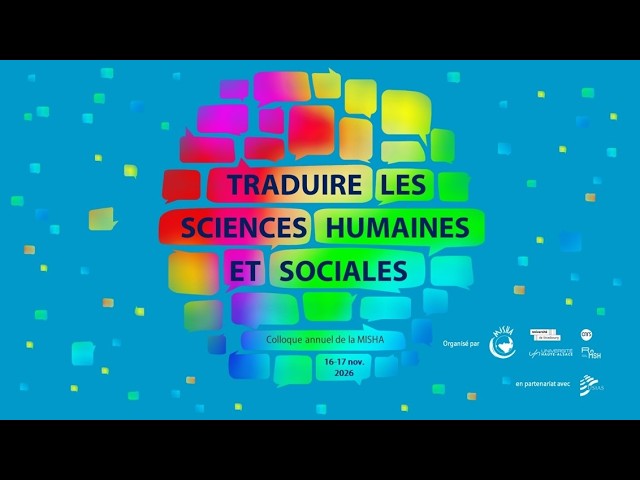
Nouveaux outils, nouveaux défis : IA et traduction
New Tools, New Challenges: AI and Translation
Title history
- Nouveaux outils, nouveaux défis : IA et traduction — observed on 20261119-1100 UTC (YouTube)
Keywords
Summary
192 words
Critical Evaluation
Value of the Information & Strength of the Argument
The presentation’s value lies in its concrete, systematic comparison of machine and human translations, grounded in specific textual examples (poetry and prose). The argumentation is solid: Grass demonstrates through detailed stylistic and semantic analyses that while AI excels in terminological accuracy and speed, it struggles with idiomaticity, internal echoes, and authorial voice. He supports this with quantitative observations (e.g., seven-word choices in a stanza, omissions in human versions) and qualitative judgments. The discussion of post-editing and the changing role of translators is persuasive, though it relies heavily on personal experience and lacks broader empirical data. The argument that AI’s energy consumption is modest (140 Wh for a book) is intriguing but not deeply contextualized. Overall, the reasoning is coherent and well-illustrated, making a compelling case for a nuanced view of AI in translation.
Scientific Rigor, Source Quality, Title Accuracy
The scientific rigor is moderate: the presentation cites a ResearchGate article on translator competencies but does not provide a URL or detailed reference. It mentions tools (DeepL, ChatGPT, Claude) without citing their technical papers. The case studies are based on publicly available texts, and the analyses are detailed, but no systematic methodology (e.g., scoring criteria, statistical evaluation) is presented. The title accurately reflects the content, as the talk directly addresses how AI challenges translation practices. However, the presentation is more of an expert opinion backed by illustrative examples than a fully refereed study. The adéquation titre/contenu is strong, though the focus is predominantly on the first speaker’s presentation; the second speaker’s contribution is only announced.
263 words
Title / Content Match
The title accurately reflects the content: the talk examines AI's impact on translation, comparing machine output with human translation.
Quality & Reliability
7/10
Well-structured presentation with comparative case studies (William Blake's poem, Pamuk's excerpt), but few formal references and limited verifiable data.
Key Moments
Markers derived by PSI from the transcript: the creator did not define chapters.
- Introduction de la session et présentation de Thierry Grass
- Explication des différences entre traduction neuronale (DeepL) et LLM
- Étude de cas : traduction du poème de William Blake 'The Fly'
- Étude de cas : extrait de l'autobiographie d'Istanbul de Pamuk en turc
- Analyse des forces et faiblesses de l'IA (réalias, idiomes, échos internes)
- Discussion sur l'avenir du métier de traducteur et la post-édition
Cited Sources
- Article sur les compétences du traducteur humain vs traduction automatique (ResearchGate) — Cité par Thierry Grass comme évaluation comparative des compétences.
- Istanbul: Souvenirs d'une ville — Texte d'Orhan Pamuk utilisé comme étude de cas pour comparer les traductions.
- De l'utilité des ordres mais et so pour les traducteurs — Ouvrage de Thierry Grass et Christine Briel mentionné en introduction modératrice.
Contribution & Novelties
The original contribution lies in the concrete comparative framework for assessing AI translation, particularly the detailed analysis of how AI handles cultural realia, idiomatic expressions, and stylistic nuances. The speaker’s emphasis on the translator’s role shifting from execution to post-editing and ethical decisions offers a forward-looking perspective. The practical tip of using AI for pre-translation preparation (identifying difficulties, terminology) is valuable.
Pour aller plus loin :
- Neural machine translation — Contextualizes the technical foundations of NMT.
- Post-editing — Directly relevant to the evolving role of translators.
- Large language model — Explains the general architecture behind models like GPT.
- Translation quality assessment — Useful for understanding evaluation metrics mentioned in the talk.
111 words
Radar Profile
The profile shows a balanced output with a slight strength in information quality (8/10) and quantity (7/10), while technical level (6/10) and global reliability (7/10) are somewhat lower. This suggests the content is substantive and well-analyzed but not highly technical or heavily backed by formal references.