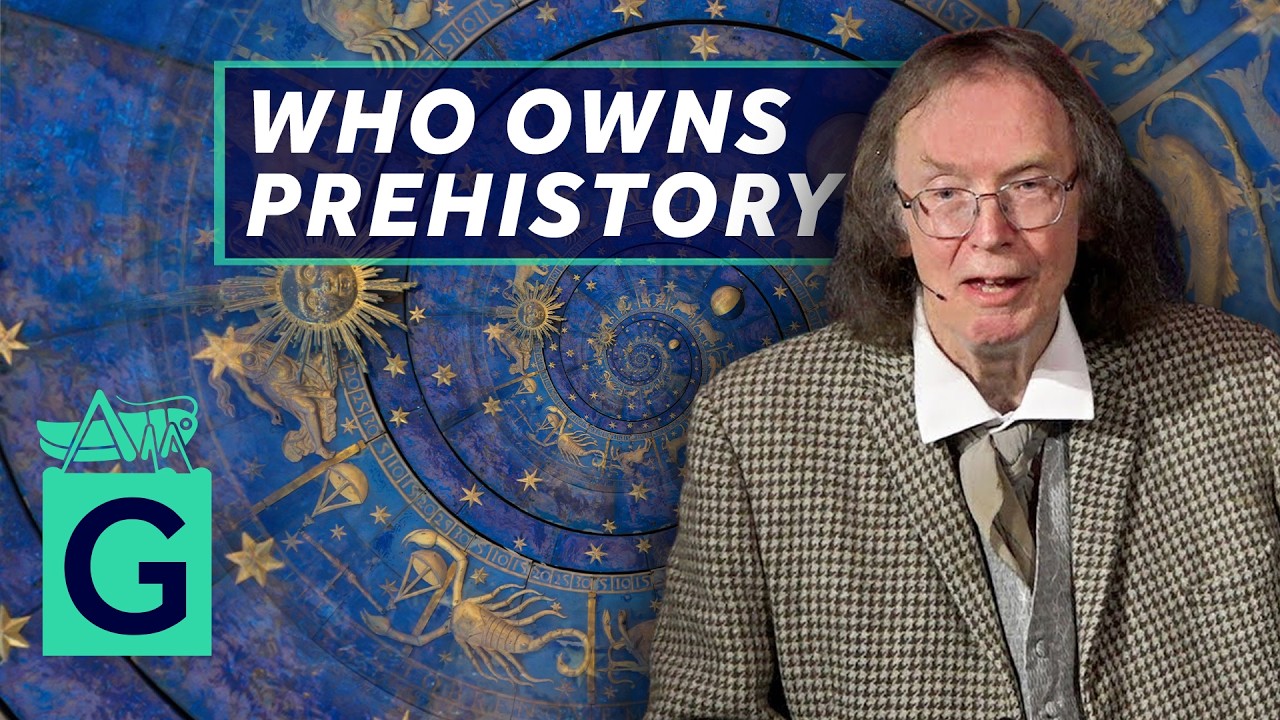
The Strange Story of Astroarcheology - Ronald Hutton
Title history
- The Strange Story of Astroarcheology - Ronald Hutton — observed on 20261113-2156 UTC (YouTube)
Keywords
Summary
204 words
Critical Evaluation
Value of the Information & Strength of the Argument
The lecture provides substantial value by offering a comprehensive historical overview of British archaeoastronomy, a topic often misunderstood or overshadowed. Hutton’s argumentation is solid and well-reasoned: he systematically explains the interplay between professional archaeology, amateur enthusiasm, and broader cultural currents. He demonstrates why Thom’s theories were initially attractive yet ultimately insufficiently supported, and he carefully distinguishes between empirical evidence and interpretation. Hutton also critiques both academic dismissal and uncritical acceptance, arguing for a balanced recognition of the sky’s importance in prehistoric landscapes. His analysis of the ’lost wisdom’ myth and its influence on both Victorian and 1960s thought is particularly illuminating, showing how ideological baggage has shaped scholarly reception. The lecture is not merely descriptive; it offers a critical synthesis that challenges both mainstream archaeology and alternative theories, making it valuable for historians, archaeoastronomers, and the interested public.
Scientific Rigor, Source Quality, Title Accuracy
The lecture demonstrates high scientific rigor. Hutton is meticulous about citing specific works and authors, including Hawkins, Thom, Michell, Ruggles, and others, and he places them in historical context. He also acknowledges limitations, such as the difficulty of proving alignments and the lack of direct evidence. The title ‘The Strange Story of Astroarcheology’ is apt: the narrative is indeed unusual, and Hutton highlights its contradictions and controversies. The lecture is well-structured with clear sections, and the sources appear credible, drawn from established academic literature and primary texts. While Hutton presents his own interpretation, he is transparent about the evidence and its ambiguities, avoiding unfounded claims. The audience’s understanding is enhanced by his critical but non-polemical tone, making the argumentation both rigorous and accessible.
276 words
Title / Content Match
The title accurately reflects the content: it presents the unusual and contentious history of archaeoastronomy in Britain, as promised.
Quality & Reliability
9/10
The lecture is delivered by a Fellow of the British Academy and leading historian, offering a well-documented historical narrative with balanced critical analysis. The argumentation is rigorous, and the speaker transparently addresses both academic and alternative strands of archaeoastronomy, providing a nuanced and credible account.
Chapters
- // Why Do Archaeologists Ignore the Sky? Archaeoastronomy in Britain
- // Big Science, Professional Archaeology & Victorian Ideas of Progress
- // The Lost Wisdom Myth: Primal Religion & Ancient Knowledge
- // Stonehenge Solstice Alignments, Maeshowe & Norman Lockyer
- // Stonehenge Decoded: Gerald Hawkins’ Computer Theory (1965)
- // Alexander Thom & the Megalithic Observatory Theory
- // Earth Mysteries, John Michell & the 1960s Counterculture
- // Testing Thom: The 1980s Archaeoastronomy Coalition
- // Clive Ruggles, Stonehenge & the Sceptical Consensus
- // Why Archaeoastronomy Stays Marginal in British Archaeology
- // Alternative Archaeoastronomy: Robin Heath, Tom Flowers & the Boyne Valley
- // Conclusion: Great Personalities & the Politics of Knowledge
Cited Sources
- Stonehenge Decoded — Mentioned as a 1965 bestseller by Gerald Hawkins and J.B. White that applied computer technology to Stonehenge and triggered popular interest in astronomical interpretations.
- Megalithic Sites in Britain — Alexander Thom's first book (1967) presenting his statistical evidence for astronomical alignments and the megalithic yard.
- The View over Atlantis — John Michell's 1969 work that popularized ley lines and Earth Mysteries, building on Thom's ideas.
- Ruggles' work on archaeoastronomy — Clive Ruggles is cited as the leading British archaeoastronomer and author of a major 1998 book summarizing evidence for rough symbolic alignments.
- An Extended Defense of Alexander Thom — Robin Heath's 2007 book, mentioned as part of alternative archaeoastronomy, defending Thom's theories against dismissal.
External References
Contribution & Novelties
This lecture provides a unique historical synthesis of British archaeoastronomy, emphasizing the sociopolitical and intellectual contexts that shaped its development. Hutton’s analysis of the interaction between professional archaeology and countercultural movements offers original insights into why the field remains controversial. He also highlights the personal dynamics and the ‘politics of knowledge’ that influence academic acceptance, a dimension often omitted from technical studies. By drawing on his expertise as a historian of religion, he connects archaeological debates to broader cultural currents, such as the ’lost wisdom’ myth and modern paganism, enriching our understanding of the field’s marginalization.
Pour aller plus loin :
- Archaeoastronomy - Wikipedia — Provides an overview of the discipline, its methods, and its history, complementing Hutton’s lecture.
- Stonehenge - Wikipedia — Covers the monument’s alignments and the various theories, including Hawkins’ and Thom’s, with references.
- Alexander Thom - Wikipedia — Biographical details and discussion of his megalithic yard hypothesis and its critiques.
- Gerald Hawkins - Wikipedia — Information on the astronomer and his seminal work ‘Stonehenge Decoded’.
169 words
Radar Profile
The radar profile shows high scores across all dimensions, reflecting a well-rounded and authoritative lecture. The highest scores are in quality and reliability, and the moderate technical level indicates a balance between accessibility and depth, consistent with a public lecture aimed at a general but intellectually curious audience.