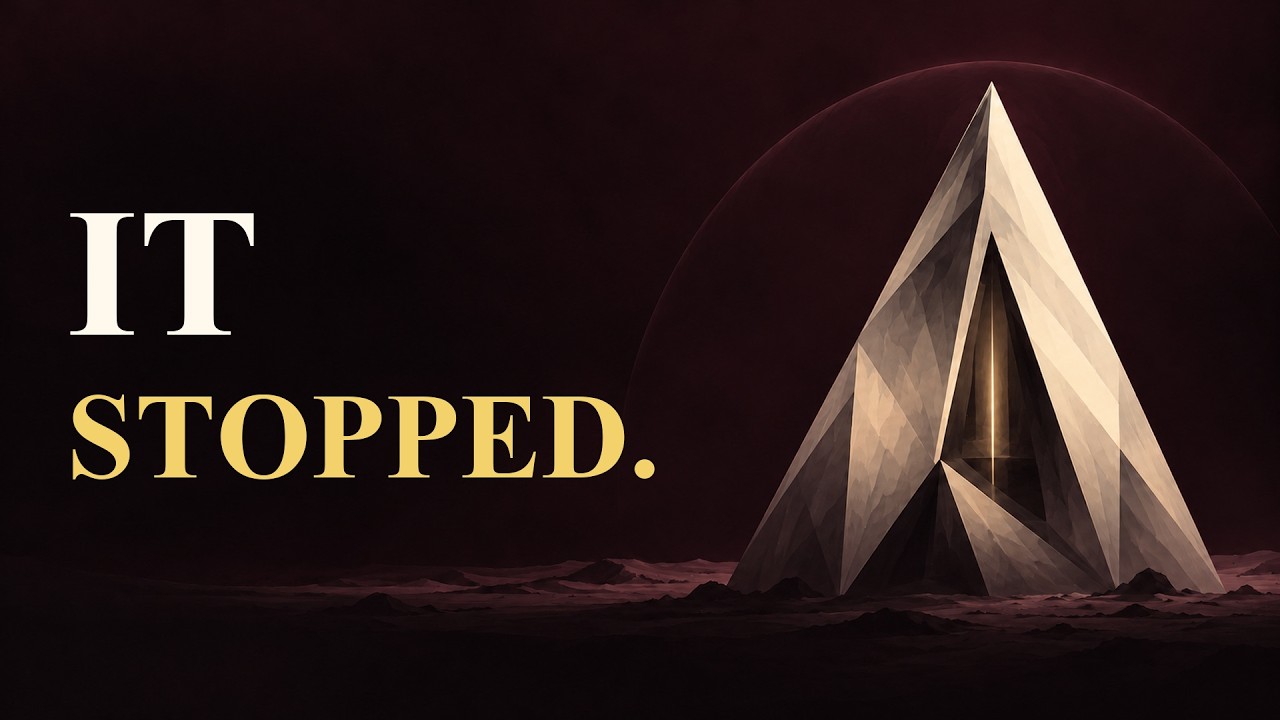
They Were Waiting for Us | The Sentinel
Title history
- They Were Waiting for Us | The Sentinel — observed on 20261030-1736 UTC (YouTube)
Keywords
Summary
140 words
Critical Evaluation
Value of the Information & Strength of the Argument
VALUE OF INFORMATION: The video provides a thorough and insightful reading of Clarke’s short story, offering both detailed plot summary and thematic analysis. It connects the story to Clarke’s technical background and the atomic age, enriching the interpretation. The argument that humanity’s first contact with alien technology results in destruction and uncertainty is well-supported by textual evidence and contextual parallels. SOLIDITY OF ARGUMENTATION: The reasoning is logical and coherent, moving from textual details to broader implications. The narrator carefully distinguishes between Wilson’s speculations and the story’s explicit facts, and he acknowledges the limits of interpretation. The argument that the story carries a sense of unease despite Clarke’s scientific optimism is convincingly made, and the link to the film is handled with nuance.
Scientific Rigor, Source Quality, Title Accuracy
SCIENTIFIC RIGOR: While this is a literary analysis rather than a scientific work, the video demonstrates rigor in its use of the source text. Quotes from the story are accurately presented, and the historical context about Clarke’s life and the post-war era is factually correct. However, the analysis is subjective interpretation, which is acknowledged. SOURCES: The video references Clarke’s story and includes image credits from Wikimedia Commons in the description, but does not cite external scholarly sources. The reliance on the original text and the author’s own commentary is appropriate for this format. ADEQUATION TITRE/CONTENU: The title ‘They Were Waiting for Us’ perfectly captures the story’s premise and the video’s central discussion of what the sentinel was waiting for. The content directly addresses the title’s question, making the title well-suited to the video.
270 words
Title / Content Match
The title accurately reflects the central mystery of the story—who was waiting and what happens when the signal stops—and the video addresses both.
Quality & Reliability
8/10
The analysis is grounded in the text of Clarke's short story, with careful attention to its historical context and literary significance. The video clearly separates the author's interpretation from the source material, and the argumentation is coherent. No fabricated sources; all references are legitimate.
Key Moments
Markers derived by PSI from the transcript: the creator did not define chapters.
- Introduction to the story and its plot hook.
- Description of Wilson's discovery of the pyramidal machine on the Moon.
- Wilson's explanation of the machine as a sentinel transmitting a signal.
- Discussion of the Golden Age of science fiction and Clarke's scientific optimism.
- Comparison of the short story to the film 2001: A Space Odyssey.
- Conclusion about the implications of humanity's signal cessation and the story's lasting unease.
Cited Sources
- Arthur C. Clarke portrait — Image credit for a portrait of Arthur C. Clarke.
- Alpha radiation in a cloud chamber — Image credit for a cloud chamber photo mentioned in the video.
- Advanced Test Reactor — Image credit for a test reactor photo used in the video.
- Michael Moorcock portrait — Image credit for a portrait of Michael Moorcock.
- Samuel R. Delany portrait — Image credit for a portrait of Samuel R. Delany.
Concurring Sources
- Arthur C. Clarke — Wikipedia biography confirming Clarke's life and work.
- The Sentinel (short story) — Wikipedia page for the short story, providing plot summary and background.
External References
Contribution & Novelties
The video offers a fresh and accessible literary analysis of a lesser-known Clarke short story, connecting its thematic concerns to the author’s biography and the broader context of science fiction history. Its exploration of the story’s unease beneath scientific optimism provides a nuanced perspective that goes beyond simple plot summary.
Pour aller plus loin :
- Arthur C. Clarke — Background on the author and his other works.
- The Sentinel (short story) — Wikipedia page for the story.
- 2001: A Space Odyssey (film) — The film inspired by this story.
- Fermi paradox — Related to the question of why we haven’t heard from alien civilizations.
104 words
Radar Profile
The radar profile shows a balanced performance: high scores in information quality and reliability, moderate in information quantity and technical level. The video excels in providing a coherent and well-argued analysis, which is reflected in the strong quality and reliability scores, while the technical depth remains accessible to a general audience.
💬 Based on the 30 comments analyzed, the overall sentiment is extremely positive, with many viewers praising the humorous sponsor segment and the insightful literary analysis. The majority of comments express appreciation for the video's depth and the creator's engaging style.