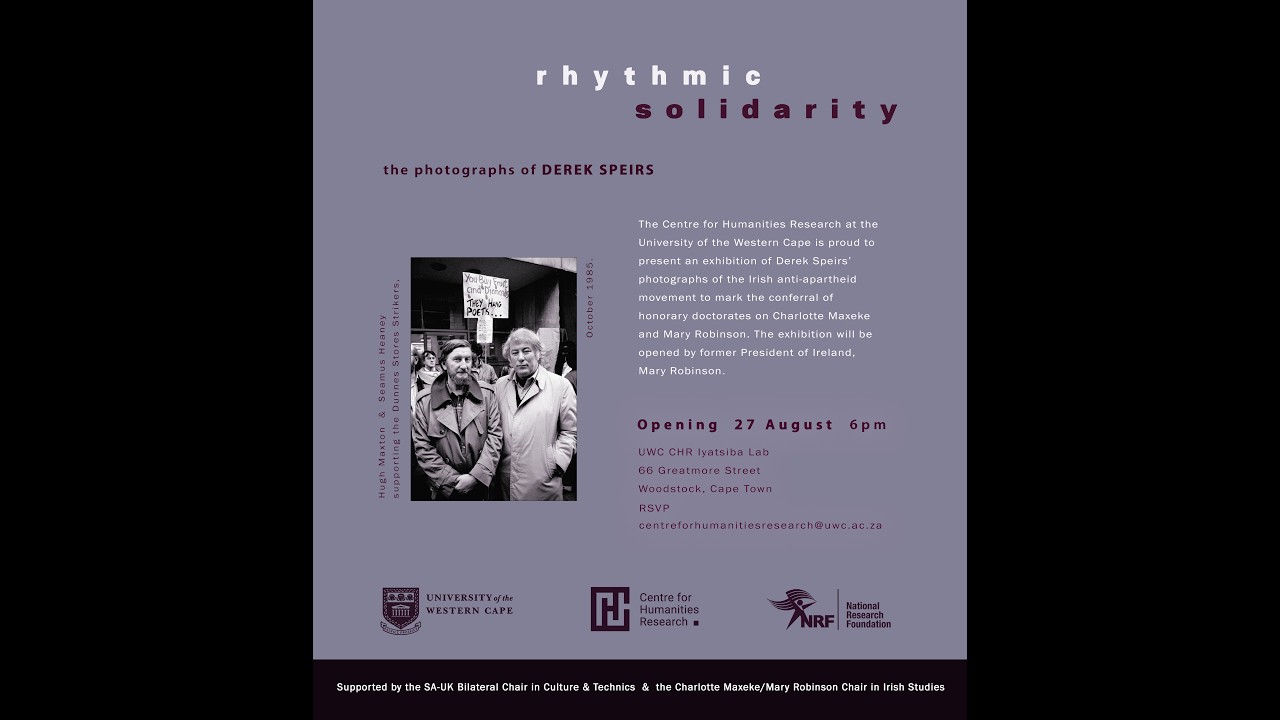
Rhythmic Solidarity: The Photographs of Derek Speirs Exhibition Launch | 27 August 2026
Keywords
Summary
185 words
Critical Evaluation
Value of the Information & Strength of the Argument
The value of this video lies in its first-hand testimonies and the contextual exploration of a lesser-known chapter in anti-apartheid history. Mary Robinson’s personal anecdotes—such as her visit to Somalia with Speirs and the Dunnes Stores strike—add authenticity and human depth. The argumentation is persuasive: photographs serve as unassailable evidence, and the discussion on AI as a threat to truth is well-articulated. However, the argument remains largely from personal experience rather than systematic analysis, and the emphasis on poetry and symbolism, while enriching, sometimes overshadows empirical detail.
Scientific Rigor, Source Quality, Title Accuracy
The video demonstrates strong scholarly rigor through the involvement of an academic institution and a distinguished political figure. Although no external sources are cited in the video itself, the references to Seamus Heaney’s poem ‘Human Chain’, Kader Asmal’s work, and the historical records of the Irish anti-apartheid movement are credible. The title accurately frames the content as an exhibition launch, and the discussion stays focused on the theme. The limitations include a lack of deeper documentary evidence and a tendency toward nostalgic reflection rather than critical analysis, but the overall reliability is high given the participants’ expertise.
199 words
Title / Content Match
The title accurately reflects the content: the launch of the Derek Speirs exhibition on the Irish anti-apartheid movement, focusing on solidarity and photography.
Quality & Reliability
8/10
The event features Mary Robinson, former President of Ireland, and academic director of CHR, providing a credible first-hand account of the Irish anti-apartheid movement. The discussion is grounded in historical facts and personal memories, but remains anecdotal and interpretive rather than rigorously documented.
Key Moments
Markers derived by PSI from the transcript: the creator did not define chapters.
- Introduction to the Charlotte Maxeke-Mary Robinson Research Chair and its founding context.
- Explanation of the three research lenses: aesthetic education, culture and technics, new ecologies of the subject.
- Mary Robinson's opening speech begins, reflecting on her role in the anti-apartheid movement.
- Mary Robinson highlights the Dunnes Stores strikers and Derek Speirs' role as unofficial photographer.
- Discussion on Seamus Heaney's poem 'Human Chain' and the concept of rhythmic solidarity.
- Mary Robinson warns about AI disinformation and calls for support for photojournalists.
Cited Sources
- CHR Flagship Website — Official website of the Centre for Humanities Research, providing additional resources and information.
- Centre for Humanities Research Facebook — Facebook page for the Centre for Humanities Research, sharing updates and events.
Contribution & Novelties
The video provides a unique archival perspective on the Irish anti-apartheid movement through the lens of photographer Derek Speirs, highlighting the role of ordinary individuals and the importance of visual documentation. It enriches the historical discourse by connecting literature, photography, and political activism, and offers a contemporary warning about the risks of AI-generated disinformation.
Pour aller plus loin :
- Seamus Heaney — The Nobel laureate whose poetry, especially ‘Human Chain’, informs the theme of solidarity.
- Mary Robinson — Former President of Ireland and UN High Commissioner for Human Rights, key figure in the anti-apartheid movement.
- Anti-apartheid movement in Ireland — Historical overview of Irish involvement in the struggle against apartheid.
- The Cure at Troy — Heaney’s play associated with the anti-apartheid cause.
122 words
Radar Profile
The radar profile shows high scores in quality and reliability, reflecting the credibility of the speakers and the factual basis of the narrative. Quantity of information is moderate, while technical level is lower, indicating an accessible, historically-oriented discussion rather than a technical exposé. The overall shape suggests a balanced, informative event suitable for a general audience interested in history and human rights.