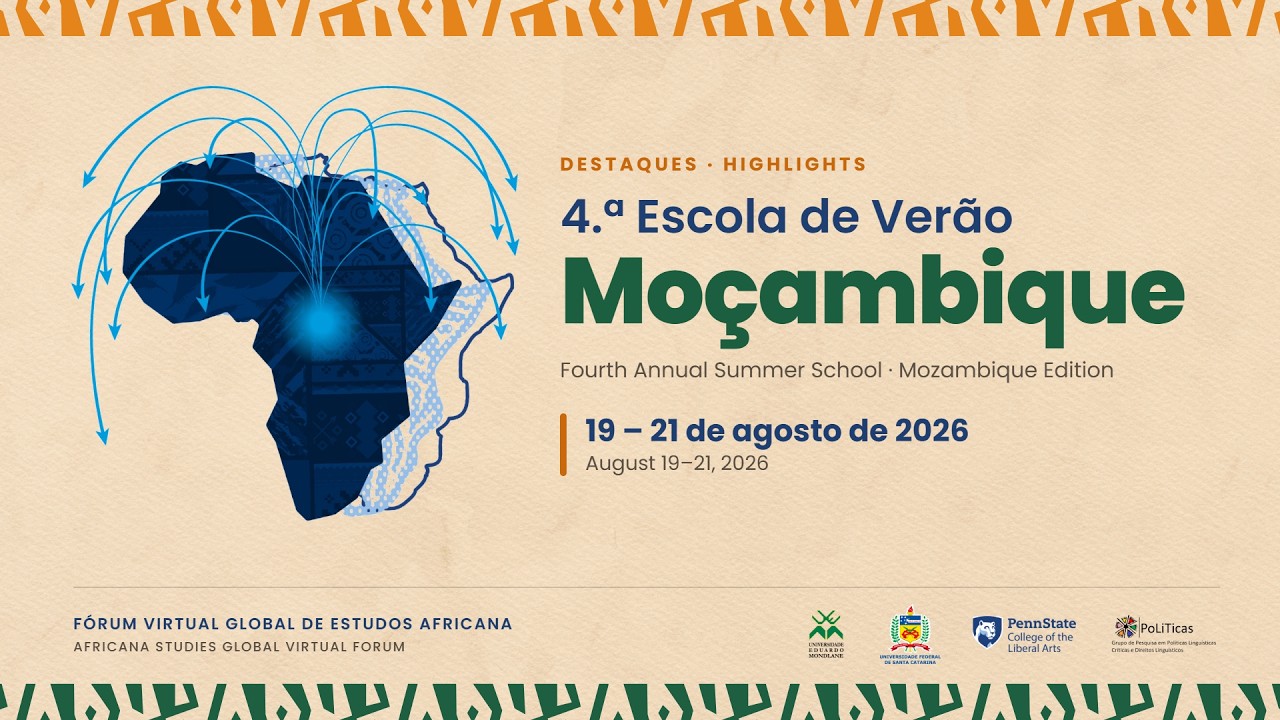
Highlights from the AFSGVF Fourth Annual Summer School (Mozambique Edition)
Title history
- Highlights from the AFSGVF Fourth Annual Summer School (Mozambique Edition) — observed on 20261110-0839 UTC (YouTube)
Keywords
Summary
208 words
Critical Evaluation
Value of the Information & Strength of the Argument
The video’s value lies in its presentation of concrete expert perspectives on language policy in African postcolonial contexts, with Mozambique as a case study. The argumentation is grounded in fieldwork observations, linguistic theory, and legal analysis. Speakers effectively demonstrate how colonial legacies persist in education and legal systems, limiting access to justice and quality education for speakers of non-official languages. The argument that bilingual education built on African languages can be decolonizing is supported by cognitive benefits and community participation. The use of concrete examples, such as the challenges in rural supervision and the distortion of court testimony through translation, strengthens the overall argumentation. However, the highlights format means certain assertions lack detailed evidence or rigorous data presentation, and the variety of speakers leads to some thematic dispersion.
Scientific Rigor, Source Quality, Title Accuracy
The rigor is moderate: the video consists of expert talks but does not systematically cite academic sources. Speakers reference institutional experiences and conceptual frameworks (e.g., missionary linguistics, additive bilingualism) but offer limited empirical data. The title accurately describes the content, which is a summary of the summer school proceedings. No external sources are provided in the description, and the video does not explicitly reference specific publications. The adequacy between title and content is high, as the video indeed highlights key moments from the Mozambique edition. The lack of citations and detailed evidence slightly reduces the scientific rigor, though the expertise of the speakers adds credibility.
248 words
Title / Content Match
The title accurately reflects the content: it is a compilation of highlights from the fourth annual summer school with a specific focus on Mozambique, as described.
Quality & Reliability
7/10
The content features expert presentations and academic discussions on language policy and multilingual education in Mozambique. While no explicit citations are given in the video, the speakers demonstrate field expertise and reference concrete examples. The overall reliability is moderately high, though the format (highlights from a summer school) limits depth.
Key Moments
Markers derived by PSI from the transcript: the creator did not define chapters.
- Introduction to the fourth summer school, history, and multilingual format.
- Discussion on colonial linguistics and the concept of 'Christian lect' (missionary-created language varieties).
- Focus on Mozambique's linguistic diversity and the need to use Mozambican languages in education for quality improvement.
- Access to justice: language barriers in courtrooms, translation issues, and their impact on judicial decisions.
- Cognitive benefits of bilingual education and its role in promoting intergroup understanding.
- The 'multilingual monolingual paradox' and role of Radio Mozambique in using national languages.
- Closing remarks, thanks to institutions, and acknowledgment of the summer school's success.
Contribution & Novelties
The video provides a rich, multi-faceted exploration of language policy in Mozambique, connecting colonial linguistic critique with practical implications for education and justice. Its original contribution lies in bringing together diverse expert voices from interdisciplinary fields, including applied linguistics, law, and education, to discuss concrete challenges and decolonizing strategies. The concept of ‘Christian lect’ is emphasized as a tool to deconstruct the historical power dynamics in language standardization.
Pour aller plus loin :
- Language policy — Overview of language policy theories and practices.
- Multilingualism — Background on individual and societal multilingualism.
- Mozambique – Languages — Information on Mozambique’s linguistic diversity and language status.
103 words
Radar Profile
The radar profile shows high scores in information quantity and technical level, indicating a content-rich and educationally oriented video. Quality and reliability are moderately high, suggesting accurate expert discussion but with room for more rigorous referencing.