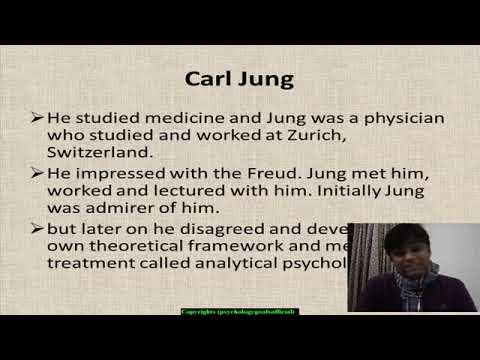
Analytical Psychology | Carl Jung | Archetype | Jungian Theory
Keywords
Summary
156 words
Critical Evaluation
Value of the Information & Strength of the Argument
The video’s value lies in its clear and structured presentation of Jung’s core ideas, making complex psychological theories understandable for beginners. It uses relatable analogies, such as comparing the persona to an actor’s mask, and explains each archetype with practical examples. The argumentation is coherent, logically progressing from biography to the structure of the unconscious and then to archetypes. However, the lecture lacks depth in exploring the underlying evidence or criticisms of Jung’s theories, and it does not engage with contemporary psychological perspectives. The argumentation is primarily descriptive, relying on the authority of Jung’s own works rather than independent analysis.
Scientific Rigor, Source Quality, Title Accuracy
The video does not cite any external sources, which limits its scientific rigor. It presents Jung’s ideas as established facts without referencing primary texts or academic studies. The title aligns perfectly with the content, as it explicitly names the key topics covered. No comments were provided for analysis, so no public feedback could be assessed.
170 words
Title / Content Match
The title accurately reflects the content, which covers Jung's analytical psychology and the concept of archetypes.
Quality & Reliability
6/10
The video provides a clear and accurate overview of Jung's analytical psychology, but lacks external citations and critical analysis. It is suitable for beginners but does not delve deeply into the subject.
Key Moments
Markers derived by PSI from the transcript: the creator did not define chapters.
- Introduction to the lecture and Carl Jung's biography
- Discussion of Jung's relationship with Freud and the unconscious
- Explanation of personal unconscious vs collective unconscious
- Introduction of archetypes and their universality
- Detailed description of the persona and anima/animus archetypes
- Explanation of the shadow and self archetypes, and conclusion
Contribution & Novelties
The video offers a concise and accessible introduction to Jungian analytical psychology, organizing key concepts in a structured manner for educational purposes. It does not introduce new research but synthesizes existing knowledge in a beginner-friendly format.
Pour aller plus loin :
- Analytical Psychology - Wikipedia — Overview of Jung’s theoretical framework and its development.
- Collective Unconscious - Britannica — Detailed explanation of Jung’s concept of the collective unconscious.
- Archetype - Wikipedia — General definition and examples of archetypes in various fields.
81 words
Radar Profile
The radar profile shows moderate scores across information quantity and quality, with a lower technical level, indicating an introductory educational video. Reliability is moderate due to the lack of external sourcing, resulting in an overall 4-star rating.